


Air Purifiers for Wildfire Smoke
Wildfire smoke releases PM2.5, ultrafine particles, and VOCs that settle in indoor air and linger for hours. HyperCaptive Filtration captures particles down to 0.01 µm in laboratory conditions — trusted in more than 15 million homes worldwide.*
*Laboratory result; performance varies with room size, ventilation and use.
Find Your Pollen Air PurifierFind the Right Air Purifier for Wildfire Smoke
Wide range of Coway model uses our HyperCaptive Filtration System. Match the unit to your room.
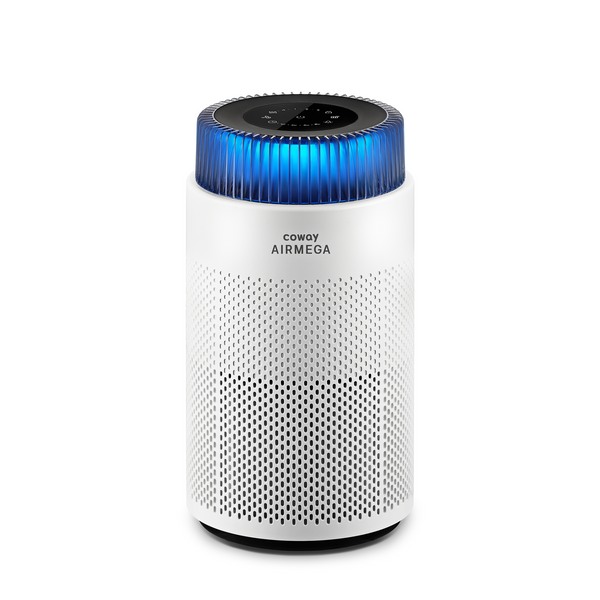
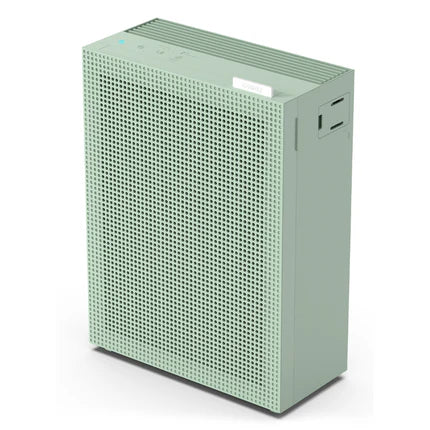
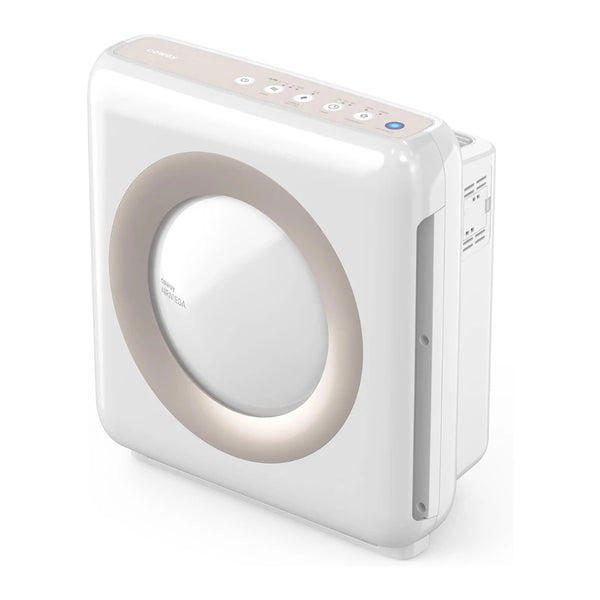
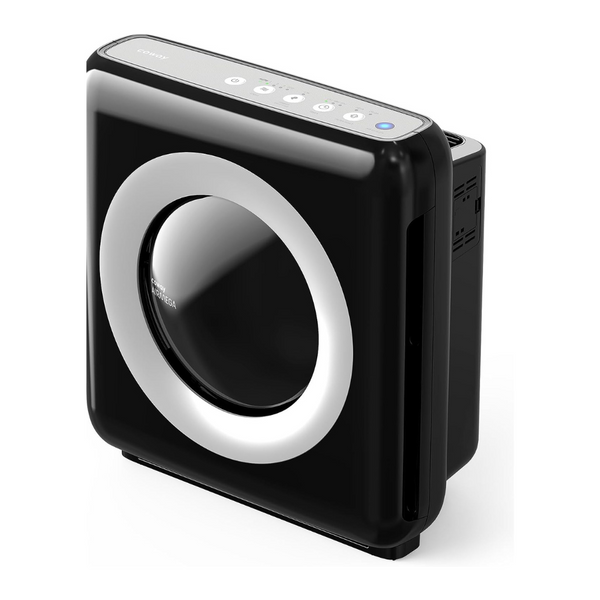
During peak smoke periods, choosing a unit rated above the room's actual size makes practical sense — outdoor air exchange continuously reintroduces particles, raising the effective load above sealed-chamber test conditions. The Airmega 150 covers up to 73 m²; the Mighty covers up to 109 m².
Why Standard HEPA Falls Short for Wildfire Smoke
Wildfire smoke spans a wide particle range — much of it smaller than the standard HEPA threshold.
Independently certified by ECARF · Verified by the British Allergy Foundation · Tested to BS EN 1822 - performance at home varies with room size, ventilation and use.
How an Air Purifier Reduces Wildfire Smoke Indoors
When wildfire smoke enters through gaps, ventilation or briefly opened doors, it disperses as a suspension of fine particles and gases throughout the room. A HEPA-based purifier draws the room air through its filter stack, trapping particles by size and using activated carbon to adsorb gas-phase compounds.
On Auto Mode, Coway purifiers monitor the room's air quality continuously through a built-in sensor. As particulate concentration rises, fan speed increases automatically — returning the room air to a cleaner state more quickly.
Air exchange with the outdoors keeps reintroducing particles as long as outdoor smoke persists. Keeping the unit running allows it to counter that steady intake. Pausing the purifier while the smoke source remains active allows concentration to rebuild.


Wildfire Smoke in the UK — When It Arrives and Why
The UK does not experience large-scale wildfires directly, but smoke from fires in mainland Europe and domestic sources reaches indoor air throughout the year.
What Customers Say
Verified reviews from customers across the UK
"Last summer's wildfire smoke was genuinely awful — windows shut, eyes streaming, that acrid smell hanging around all day. This cleared the air in our sitting room within half an hour, and the difference was immediately noticeable. Replacement filters aren't cheap, but for what it actually does, I've no complaints."
"With wildfire smoke drifting across from the continent becoming something of an annual occurrence, I finally decided to invest — and I'm glad I did. The multi-stage HEPA and activated carbon filtration handles both particulates and that burnt, chemical edge to the air rather well. It's not inexpensive, but neither is spending a week indoors with a tension headache."
"I always assumed air purifiers were more lifestyle accessory than practical necessity — then we had that week in July where the sky turned orange and my partner couldn't stop coughing. Within an hour of switching this on, the air genuinely felt different. Won't be without one now."
How to Get the Most from Your Coway During a Smoke Event
Placement, settings and a few practical habits affect how quickly smoke particles clear from the room air.
Place the unit in the centre of the room, away from walls
Most Airmega models draw air from all sides — positioning the unit against a wall restricts intake on one side. In the centre of the room, or at least 30–50 cm from any surface, the unit processes the room volume more evenly. The Airmega 150 is designed to sit flush against walls; for that model, place it on the wall opposite the main entry point for outdoor air.
Keep windows and doors closed while the unit is running
Every time outdoor air enters the room, it reintroduces smoke particles. The purifier works against a continuous particle source if the room is not sealed. Closing windows, gaps under doors, and any active ventilation reduces that intake and allows the unit to bring down the particle concentration in the room more quickly.
Use Auto Mode — let the sensor respond to the room
Auto Mode monitors the room's particle concentration continuously and adjusts fan speed to match. During a smoke event, particle load fluctuates — a door briefly opened, a breeze through a gap, or a shift in outdoor smoke direction. Auto Mode handles that variation without intervention.
Run the unit continuously during prolonged smoke periods
During multi-day smoke events — transported European plumes or extended domestic burning — the outdoor source replenishes indoor particles faster than the unit can clear them if run intermittently. Continuous operation keeps the room air at a lower particle concentration. Coway purifiers are designed for 24-hour use. On Auto Mode, fan speed adjusts to detected air quality rather than running at maximum throughout.
Size the unit for the room — or one size up during smoke season
Coway's CADR ratings are measured in a sealed test chamber. In a home environment, gaps in the building envelope allow outdoor smoke particles to enter continuously. For rooms close to the rated ceiling of a model — a 20 m² bedroom at the limit of the Airmega 100's 25 m² rating — consider the next model up during periods of sustained outdoor smoke. The Airmega 150 covers 73 m²; the Mighty covers 109 m².
Check and replace filters on schedule
A saturated filter passes more particles than a fresh one. Coway filters are rated for up to 12 months under normal use — during heavy smoke periods, that loading accumulates faster. The pre-filter is washable on all Airmega models; cleaning it every 2–4 weeks during smoke season preserves airflow through the main HEPA and carbon layers.
Quick reference — smoke event checklist
- Centre placement, 30 cm+ from walls
- Windows and doors closed
- Auto Mode on
- Run continuously while outdoor smoke persists
- Pre-filter cleaned; main filter not overdue
- Unit sized for the room or one tier above
Air Purifiers & Smoke FAQs
Everything you need to know before choosing.
Air purifiers using HyperCaptive Filtration can remove fine smoke particles, PM2.5, and combustion-related VOCs from the air in a room. The effectiveness depends on room size relative to the unit's rated coverage, how well the space is sealed against outdoor air entry, and whether the unit runs continuously. Coway's CADR figures state how much air the unit processes per hour — matching that figure to your room size is the key decision.
Wildfire smoke is a mixture of particle sizes and gas-phase compounds. Coarser soot and ash particles range from roughly 0.5 µm to 10 µm. The PM2.5 fraction — particles under 2.5 µm — sits between 0.1 µm and 2.5 µm and constitutes the largest share of airborne wildfire smoke. Ultrafine combustion particles can be smaller than 0.1 µm. HyperCaptive Filtration captures particles down to 0.01 µm in laboratory conditions, covering this full range. The activated carbon layer addresses the gas-phase components including smoke odour and VOCs.
Running the unit continuously during periods of outdoor smoke makes practical sense because fresh smoke particles enter the room whenever air is exchanged with the outside — through ventilation gaps, briefly opened doors, or windows. As long as the outdoor source persists, particles continue entering the room. Auto Mode adjusts fan speed to match the detected particle concentration, so energy use scales with the actual air quality rather than running at full speed throughout.
ECARF (the European Centre for Allergy Research Foundation) independently tests products and certifies those that demonstrably reduce specific airborne allergens — including pollen, dust, and pet dander. The certification confirms measured allergen particle removal performance. It covers particle capture, not health or medical outcomes.
The Airmega Mighty is rated to 109 m² and carries a CADR of 421 m³/h. Independent sizing guidance for smoke events suggests selecting a unit with capacity beyond the room's standard rating, as outdoor smoke infiltration raises the particle load above normal indoor conditions. For open-plan spaces above 100 m², the Airmega JET (104 m², 402 m³/h) or Airmega 350 (up to 148 m² in 30 minutes, 713 m³/h) may be more appropriate.
Coway: 35 Years of Cleaner Air
Since 1989, one mission: bringing fresh, healthy air into every home.