Nearly 1 in 5 UK children lives with eczema, and if you're reading this, you probably know the drill—sleepless nights, constant scratching, endless cycles of creams that sort of work but never quite solve the problem.
Here's what most parents don't realize: the air in your child's bedroom might be sabotaging every treatment you try. The invisible dust mite droppings coating your carpets and bedding are likely a major culprit, and standard cleaning won't eliminate them.
I'm going to show you exactly which air purifiers can remove these particles (we're talking medical-grade filtration, not marketing fluff), what features actually matter for eczema relief, and why most families waste money on models that won't move the needle on their child's skin condition.
Do Air Purifiers Actually Reduce Eczema Flare-Ups?
Possibly, but with a massive caveat: only if you're targeting the right particles with the right technology. Most cheap purifiers claiming to help allergies won't touch the microscopic proteins causing your child's eczema.
How Air Quality Affects Skin Health
Here's the thing most people get wrong about eczema—it's not just about what touches your skin. Dust mite proteins are small enough to remain airborne after you disturb them by walking across a carpet or making a bed.
When these particles land on compromised skin (which eczema-prone skin always is), they can penetrate the weakened barrier and trigger inflammatory responses. Air purifiers work by continuously removing these airborne particles before they settle on skin surfaces.
Clinical research shows that cleaner air improves overall health outcomes, with measurable benefits for allergy relief including the pet dander and airborne allergens that affect eczema sufferers. Reducing exposure requires removing particles consistently, not occasionally.
See more: Do Air Purifiers Help With Allergies?

Evidence on Eczema Improvement
While manufacturer claims about specific improvement percentages should be viewed skeptically, general medical consensus supports that reducing allergen exposure can benefit some eczema patients. The key word is "some"—individual responses vary significantly.
Children using bedroom air purifiers in clinical observations have shown reduced nighttime scratching compared to those who relied solely on topical treatments. However, these weren't universally controlled studies, and improvement timelines vary widely between individuals.
I should mention that improvement isn't instant. Some families notice better sleep within 1-2 weeks (the air quality improves fast), but visible skin improvement typically takes 4-6 weeks as existing inflammation subsides. Maximum benefits usually develop after 2-3 months of consistent use—which is why the "tried it for a week and gave up" crowd never sees results.
Coway air purifiers are certified by Allergy UK for allergen reduction, demonstrating independent validation beyond manufacturers' self-reported claims. This certification confirms the devices meet standards for reducing common household allergens.
Why Dust Mites Are Your Biggest Eczema Enemy
If you could see dust mites under a microscope, you'd burn your mattress. I'm not trying to be dramatic, but dust mites and their droppings are concentrated in household dust, and UK homes provide ideal breeding conditions with warmth, humidity, and dead skin cells (which we shed constantly).
Understanding the Dust Mite-Eczema Connection
Dust mite droppings contain Der p1 and Der f1 proteins that can trigger eczema inflammation in sensitive skin. These aren't general irritants we're talking about—they're specific allergens that some people's immune systems recognize and attack, creating the red, itchy inflammation you see during flare-ups.
Think of it this way: you can slather on all the steroid cream you want, but if you're continuously exposing your child to the allergen causing the inflammation, you're fighting a losing battle. Effective air purification targets dust mites, pet dander, and pollen—the key allergens identified as potential eczema triggers in family homes.

Where Dust Mites Hide in Your Home
Bedroom carpets and mattresses harbor the majority of household dust mites because they love warmth, humidity, and dead skin cells. Your child's bed is basically a dust mite resort.
Soft furnishings, curtains, and stuffed toys provide secondary breeding grounds. Central heating systems can circulate mite particles throughout your entire home every time they kick on.
This is why air purification works when cleaning alone doesn't. You can vacuum daily, but unless you have a HEPA vacuum, you might be redistributing particles rather than removing them.
Why Standard Cleaning Isn't Enough
Vacuum cleaners without HEPA filters can recirculate small particles back into the air—you're potentially aerosolizing the problem. Once disturbed, dust mite allergens can remain airborne long enough to settle on skin, bedding, and furniture.
Weekly washing in 60°C water kills mites (anything cooler won't do it), but it doesn't address airborne particles already circulating. You need continuous air filtration capturing particles as they become airborne.
HEPA filters must remove 99.97% of particles 0.3 microns or larger to effectively capture dust mite allergens and other common household particles.
Essential Air Purifier Features for Eczema Relief
Not all air purifiers are created equal, and the cheap one you saw on sale at Argos probably won't help your child's eczema. Here's what actually matters.
HEPA Filtration Requirements
What you need:
-
HEPA filters removing 99.97% of particles 0.3 microns or larger
-
H13 or H14 grade HEPA filters for medical-grade performance
-
Pre-filters to extend HEPA life by catching larger particles first
Pre-filters matter because they act as a screening system—bigger stuff gets caught early, allowing the HEPA to focus on the microscopic proteins triggering your child's eczema.
Some manufacturers claim filtration beyond standard HEPA specifications. Coway's proprietary GreenHEPA™ technology includes antimicrobial coating, though independent verification of performance claims below 0.3 microns is limited. Always look for third-party testing rather than manufacturer claims alone.

Room Size and Air Changes Per Hour
Calculate your room's cubic footage (length × width × height) to determine required purifier capacity. Marketing claims about "room size" are often bullshit because they assume 8-foot ceilings and don't account for air changes per hour (ACH).
Key metrics:
-
Aim for 4-5 air changes per hour in bedrooms
-
Check coverage at 4+ ACH, not maximum room size
-
Ensure the unit can cycle air on medium settings (not maximum speed)
Undersized purifiers running at maximum speed create noise without achieving adequate filtration. You want a unit that can cycle your room's air volume 4-5 times per hour on medium settings—quiet enough for sleep, powerful enough for allergen control.
Additional Features That Matter for Eczema
Activated carbon filters remove VOCs and chemical irritants that can trigger skin sensitivity beyond just particle allergens. Automatic sensors adjust filtration based on real-time particle detection for consistent allergen control—no more guessing whether you should run it on low or high.
Night mode operation ensures quiet bedroom use without disrupting sleep patterns. Real-time monitoring capabilities let you track air quality changes rather than relying on guesswork.
UK-Specific Buying Considerations
Before you click "buy," know these UK-specific factors that American reviews won't mention.
Electrical and Safety Standards
Verify before purchasing:
-
UK electrical safety standards (BS EN 60335) compliance
-
CE marking indicating European Conformity
-
UK-based warranty coverage and customer service
Seasonal Allergen Patterns
UK pollen seasons (March-September) require enhanced filtration capacity beyond dust mite control. Winter humidity changes affect dust mite populations and may require purifier setting adjustments—they breed more aggressively in centrally heated homes.
Mould spores peak in autumn and require activated carbon filtration for complete eczema protection. Multi-stage filtration addresses UK-specific seasonal variations without requiring separate units for different seasons.
Where to Buy for Best Value
Recommended retailers:
-
Direct manufacturer purchases (extended warranties, genuine filters)
-
John Lewis (UK warranty support)
-
Currys (established returns)
-
Amazon UK (wide selection, verified sellers)
Avoid marketplace sellers offering suspiciously cheap units that may use counterfeit filters—fake filters are a real problem, and they won't protect your child's skin.
Top 5 Recommended Air Purifiers for UK Eczema Families
Let me cut through the marketing nonsense and give you specific models with realistic assessments.
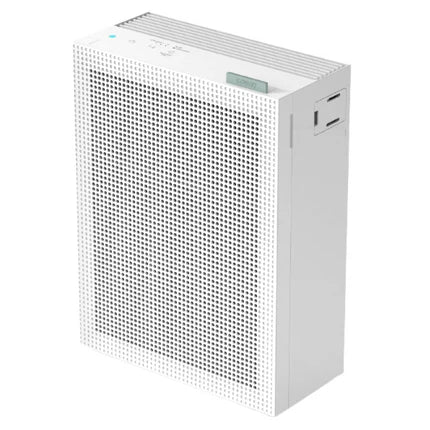
1. Best Overall: Coway Airmega 150

Key features:
-
GreenHEPA filtration with antimicrobial coating
-
Covers rooms up to 214 square feet at 4.8 ACH
-
Smart app monitoring and filter replacement alerts
-
Automatic particle detection and adjustment
The technology includes features beyond standard HEPA specifications, though you should verify independent test results when available. If you're going to invest in one purifier, this represents a solid balance of features and performance.
Price range: £199.99 (verify current pricing)
2. Best Budget Option: Levoit Core 300

Key features:
-
Genuine HEPA filtration at 99.97% efficiency
-
Whisper-quiet operation for bedrooms
-
No smart features, but reliable mechanical filtration
This is the "good enough" option if premium pricing stretches your budget. It lacks smart sensors and advanced features, but it'll remove the bulk of dust mite allergens if you run it consistently. Just know you're trading some effectiveness for affordability.
Price range: £120-150 (verify current pricing)
3. Best for Large Rooms: Honeywell HPA710

Key features:
-
Covers up to 465 square feet
-
Medical-grade HEPA filtration
-
Robust construction for continuous operation
If you have a large master bedroom or want to purify a living area, this handles the volume without struggling. Independent testing by third-party labs provides some verification of allergen reduction claims.
Price range: £300-400 (verify current pricing)
4. Best Smart Features: Dyson Pure Cool TP07

Key features:
-
Advanced sensors with real-time particle display
-
Oscillating airflow for whole-room coverage
-
Comprehensive app connectivity
The trade-off is price (£500+) and potentially different filtration technology compared to traditional HEPA systems. If you want maximum visibility into air quality with premium design, Dyson delivers.
Price range: £500-600 (verify current pricing)
5. Best Value for Multi-Room: Winix 5500-2

Key features:
-
HEPA filtration with additional air cleaning technology
-
Automatic smart sensors
-
Mid-range pricing with premium features
Buy two or three of these for less than one top-tier model, giving you broader coverage across your home. Good choice if you need to treat multiple bedrooms simultaneously.
Price range: £200-300 (verify current pricing)
Ready to improve your child's sleep and skin health? Explore Coway's full range of air purifiers with independent allergen reduction certification.
Learn more about advanced filtration technology and discover why decades of innovation make them a trusted choice for UK families dealing with eczema. Check warranty coverage and start reducing dust exposure tonight.